
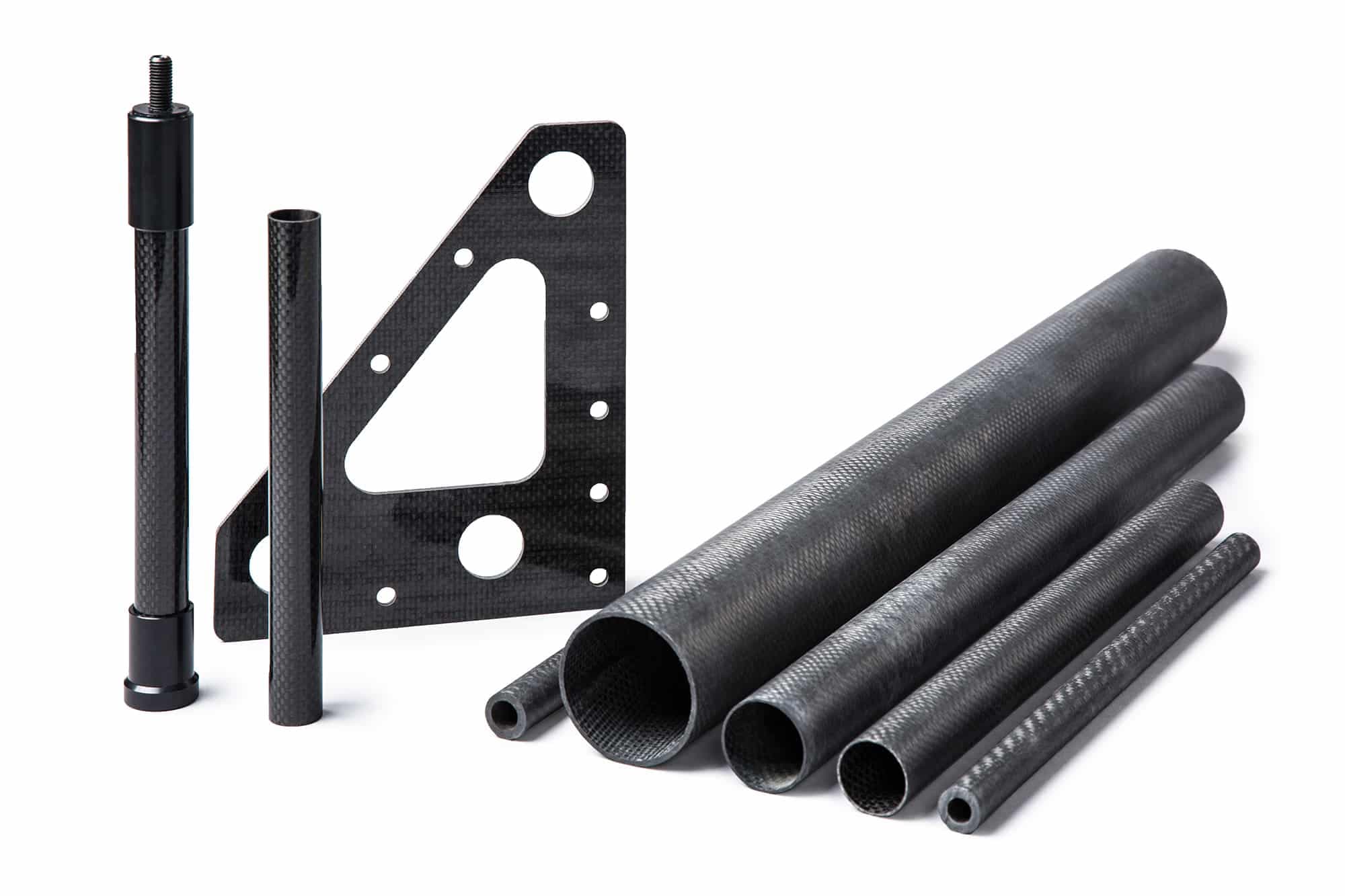
What is Carbon Fiber?
Carbon fiber is a lightweight, strong, stiff and corrosion-resistant material made from thin filaments of carbon, woven or laid into fabric and embedded in a resin matrix. The filaments are made by carbonization: polymer fibers are heated to very high temperatures in an oxygen-free environment, which drives off the non-carbon elements such as hydrogen and oxygen and leaves almost pure carbon.
The fibers are then woven into fabric (plain, twill or satin weaves) or laid in one direction as unidirectional tape, and combined with a resin, usually epoxy, sometimes phenolic, polyester or vinylester. Once cured, the resin locks the fibers in place and transfers load between them, and the combination is the composite most people simply call carbon fiber.
Carbon Fiber Traits
Strength
Carbon fiber is strong because of its microstructure: long, thin filaments of tightly bonded carbon with very high tensile strength. Packed together in a resin, they make a material that is exceptionally strong for its weight, which is why it appears wherever strength and low weight both matter.
Weight
Carbon fiber composites are light because both the fibers and the resin have a low density. A typical carbon fiber laminate weighs roughly 40% less than aluminum for the same volume, and far less than steel, while offering a better stiffness-to-weight and strength-to-weight ratio than either. That strength-to-weight ratio is what draws aerospace, automotive and sporting goods designers to it.
Stiffness
Stiffness is measured by the modulus of elasticity, a material's resistance to deforming under load. Carbon fibers have a very high modulus, and because they are highly oriented and densely packed in the laminate, a carbon part flexes far less than a glass or plastic part of the same weight.
Corrosion Resistance
Carbon does not rust, and it resists most chemical attack. The resin matrix adds a further barrier against moisture and corrosive agents. Together they make carbon fiber a good choice for harsh environments, from road salt to sea water, where a metal part would corrode.
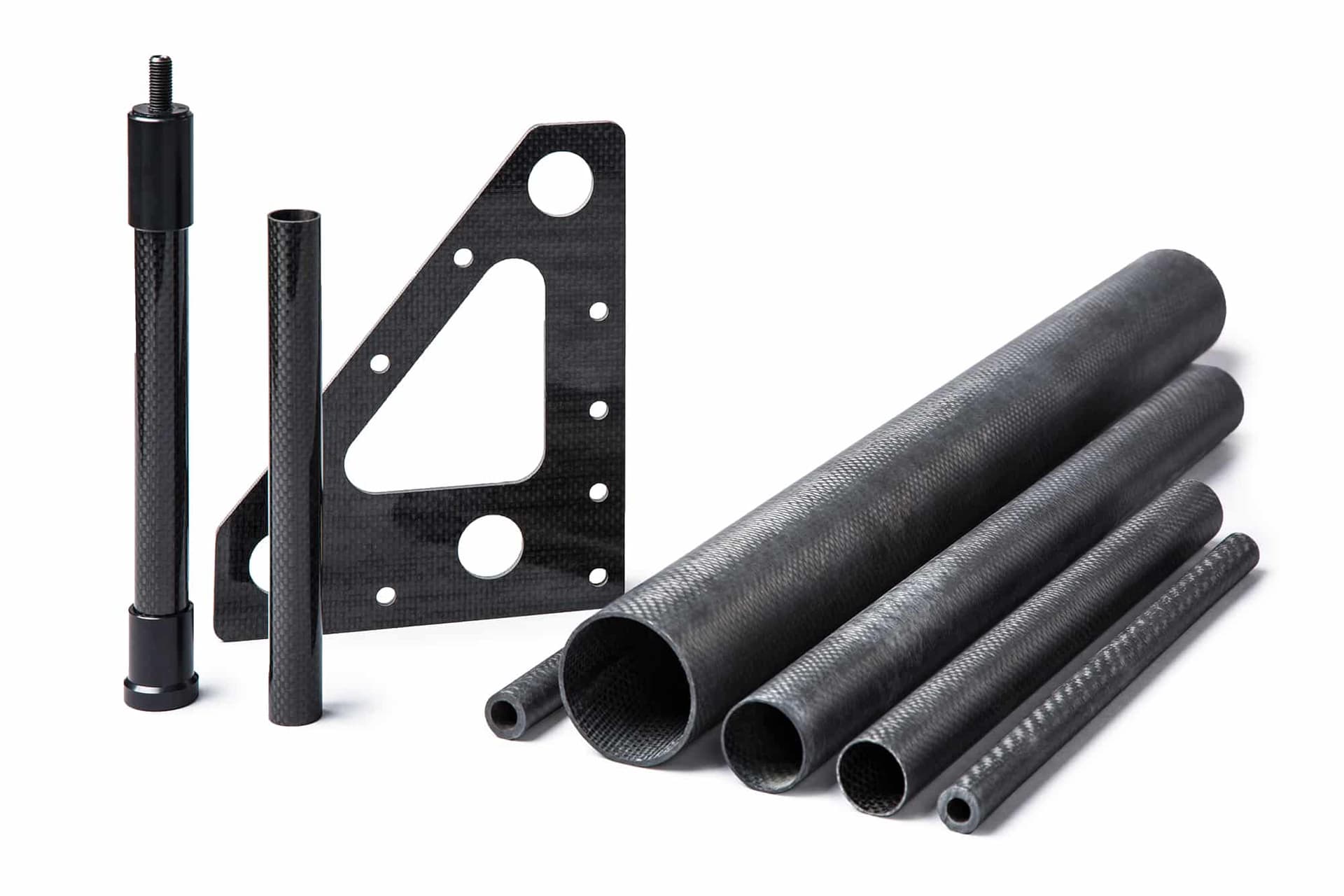
From Fiber to Tubes and Sheet
How the fibers are laid decides how the part performs. We make three main forms in-house:
- Carbon fiber tubes are roll-wrapped from prepreg on precision mandrels. Plies along the tube axis carry bending, plies at ±45° carry torsion, and balancing the two gives a drone arm, telescope section or paddle shaft the stiffness it needs without extra weight. Inside diameters start at 0.093 inch.
- Carbon fiber sheet and plate is pressed from prepreg in plain, twill or satin weaves, then cut or CNC machined into flat parts.
- Machined parts combine the two: plates, tubes and inserts cut, drilled and bonded into finished assemblies.
Where a part needs electrical insulation instead of conductivity, a laminated glass or phenolic tube is often the better choice; carbon fiber conducts electricity.
Why Different Industries Use Carbon Fiber
Lightweight
Low weight improves performance in sports equipment such as golf clubs, tennis racquets and bicycles, and it improves efficiency in cars, aircraft and drones.
Strength
High strength and rigidity suit equipment like hockey sticks and snowboards, and safety-critical parts such as chassis components and body panels.
Customizability
Carbon fiber can be laid up into many shapes and sizes, and the fiber angle can be tuned to the load, so one material covers many automotive, marine and sporting goods applications.
Durability
It resists fatigue, wear and repeated impact, which suits sports equipment and vehicle parts that see constant stress.
Cost
Its cost has fallen as production methods have improved and volumes have grown, making it practical for more industries.
If your company needs a strong, lightweight, corrosion-resistant material, carbon fiber may be the right fit. Current makes carbon fiber in several different weaves and supplies sporting goods, automotive, marine and defense customers, including sporting goods makers who use our tubes. Request a quote for pricing and lead times.