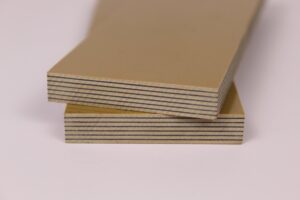
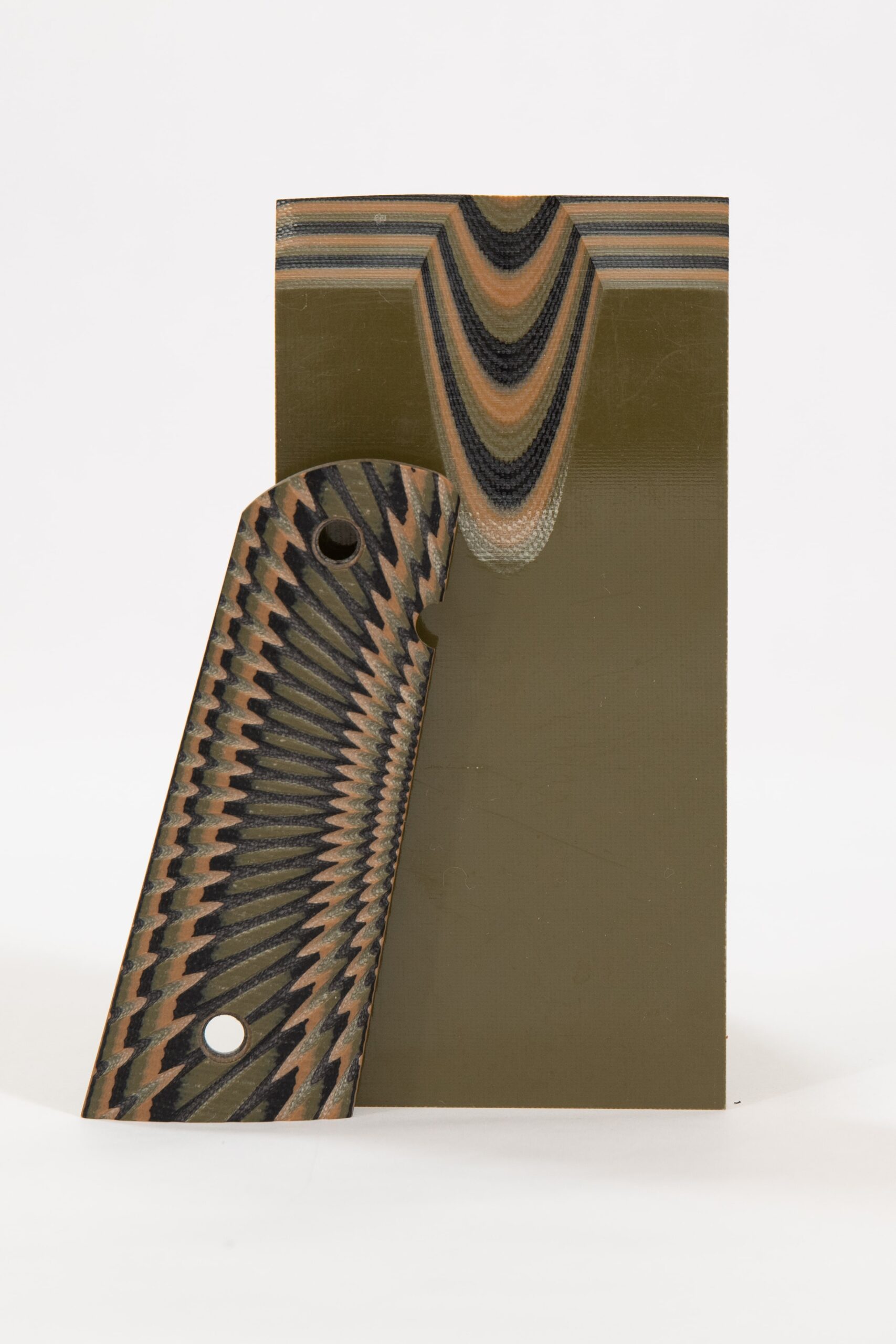
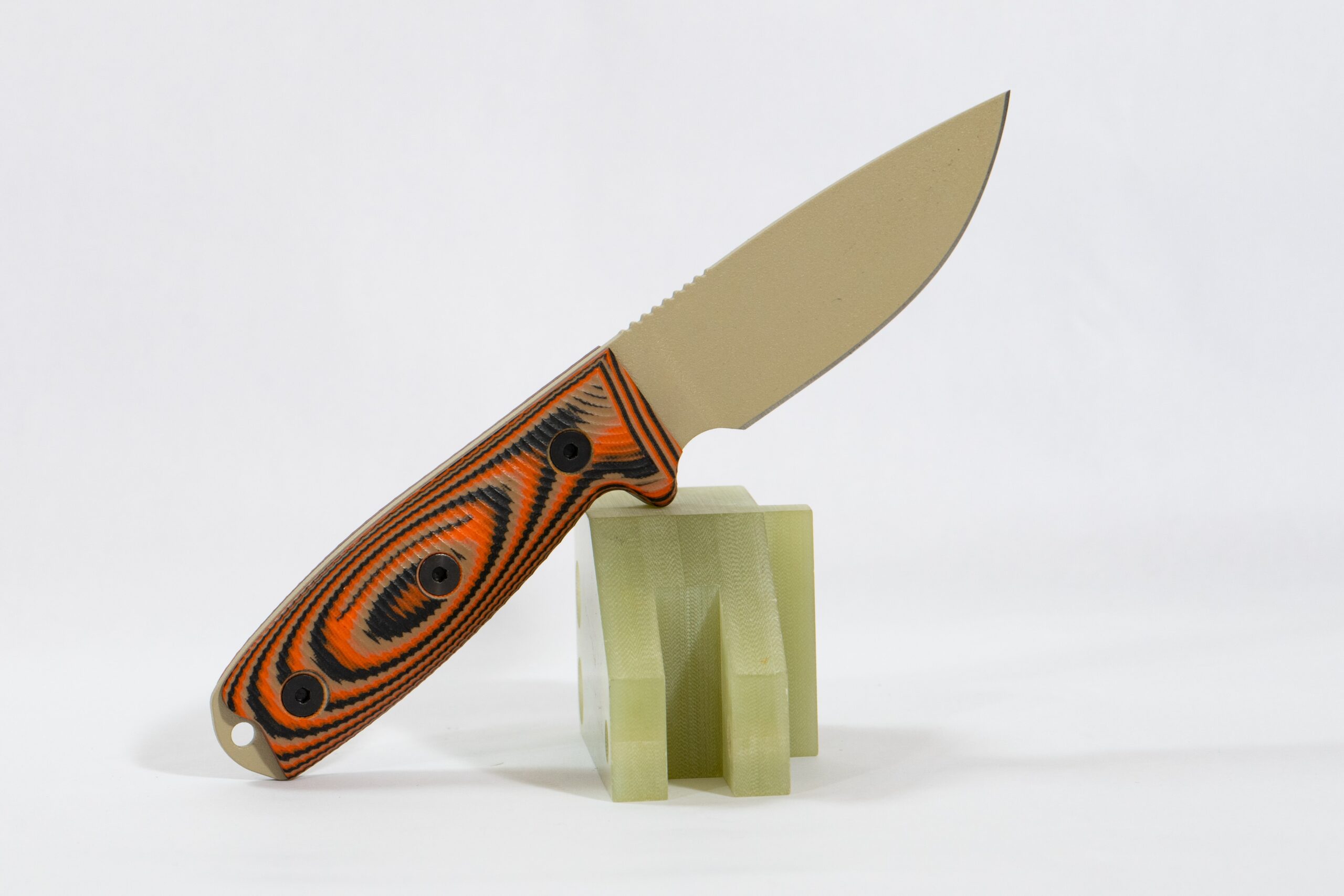
Current Composites options for your material do not just stop at the end of the production line. We offer customers the option to have their materials sanded, have an exterior texture added, or be cut to size for whatever dimensions your product calls for!
Thicknesses are available from 0.008” all the way up to 3.00”*
*If you are looking for thicker than 3.00” send us an email with your required dimensions. *Special patterns or colors are based on the raw good inventory and marketability of patterns.
Dimensional Stability for Precision Handle Shaping
Knife makers rely on materials that maintain consistent dimensions during machining, sanding, and finishing. Composite laminates engineered for low movement under heat and pressure help ensure that scales, guards, and full tang handles maintain uniform thickness and alignment. Stable laminates reduce the risk of warping during shaping or contouring, supporting clean fitment against tang surfaces and liners. This stability is especially important for high precision builds, multi material assemblies, and custom handle geometries that require repeatable accuracy.
Surface Integrity and Edge Retention During Machining
Knife handle materials must withstand aggressive machining processes without chipping, tearing, or delaminating. Reinforced laminates with controlled resin distribution and consistent fiber orientation allow makers to achieve crisp edges, smooth contours, and detailed texturing. These characteristics support advanced finishing techniques such as sculpted grips, ergonomic shaping, and high polish surfaces. Materials that maintain surface integrity also reduce tool wear and minimize rework, improving efficiency for both small batch makers and high volume production shops.
Environmental Resistance for Long Term Durability
Knife handles are exposed to moisture, oils, temperature changes, and repeated mechanical contact. Laminates engineered for low moisture absorption and chemical resistance help maintain structural performance in both indoor and outdoor environments. Reinforced composites resist swelling, fading, and surface degradation, supporting long term durability in everyday carry knives, outdoor tools, and specialty blades. This environmental resilience ensures that handles retain their appearance and mechanical properties over extended use.
Grip Performance and Ergonomic Adaptability
Beyond aesthetics, handle materials must support secure grip performance. Laminates with controlled surface friction, layered construction, or textured finishes help makers tailor grip characteristics to the intended use of the knife. Whether the application requires a smooth, polished finish for display pieces or a high traction surface for field knives, composite laminates provide the versatility needed to achieve the desired ergonomic profile. This adaptability supports both functional and decorative handle designs.
Customization Potential for Distinctive Builds
Knife makers often require materials that support unique visual effects, layered color transitions, or custom patterns. Laminates engineered for consistent layering and predictable color separation allow makers to create distinctive handle sets with repeatable results. This customization potential is valuable for OEMs, boutique makers, and artisans who rely on signature aesthetics to differentiate their products. Materials that accept sanding, sculpting, and finishing without color distortion further expand creative possibilities.