Non-Brominated G10
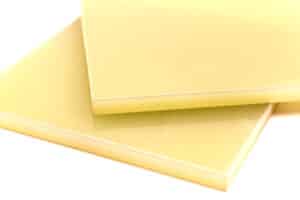
Non-Brominated G10 is a fiberglass-reinforced epoxy laminate similar to traditional G10/FR4 but without brominated flame retardants. While it maintains the excellent mechanical and electrical properties of standard G10/FR4, it offers an alternative for applications where the use of brominated compounds is restricted or undesirable due to health, safety, or environmental considerations. This makes it a strong choice for industries aiming to reduce the presence of halogenated compounds in their materials.
Material Characteristics and Performance
Non Brominated G 10 is produced from woven fiberglass cloth reinforced with an epoxy resin system. It offers high mechanical strength, low moisture absorption, and stable electrical properties across a broad range of operating conditions. While it does not include brominated flame retardant additives, it maintains the core performance characteristics associated with standard G 10/FR4, making it suitable for many of the same applications.
Current, Inc. offers this material in standard sheet sizes of 36″ × 48″ and 48″ × 96″, with thicknesses ranging from 0.005″ to 3.000″. Tubular configurations are available with inside diameters from 0.375″ to 4.000″ and outside diameters from 0.437″ to 5.000″. Sanded surfaces can be provided to support bonding, machining, or secondary finishing operations.
Fabrication Support for Industrial Applications
Non Brominated G 10 is commonly machined into insulators, spacers, brackets, enclosures, and precision components. Current, Inc. provides routing, drilling, turning, and shaping services to deliver parts that meet tight dimensional requirements. Our fabrication capabilities support prototype quantities, low volume runs, and production scale orders, ensuring consistent tolerances and repeatable performance across multiple builds.
Applications Across Multiple Industries
Non Brominated G 10 is used in electrical insulation systems, instrumentation housings, industrial equipment, and assemblies where halogen free materials are preferred. Its combination of strength, electrical stability, and environmental compatibility makes it suitable for manufacturers seeking alternatives to brominated laminates without sacrificing performance.