Phenolics Staged
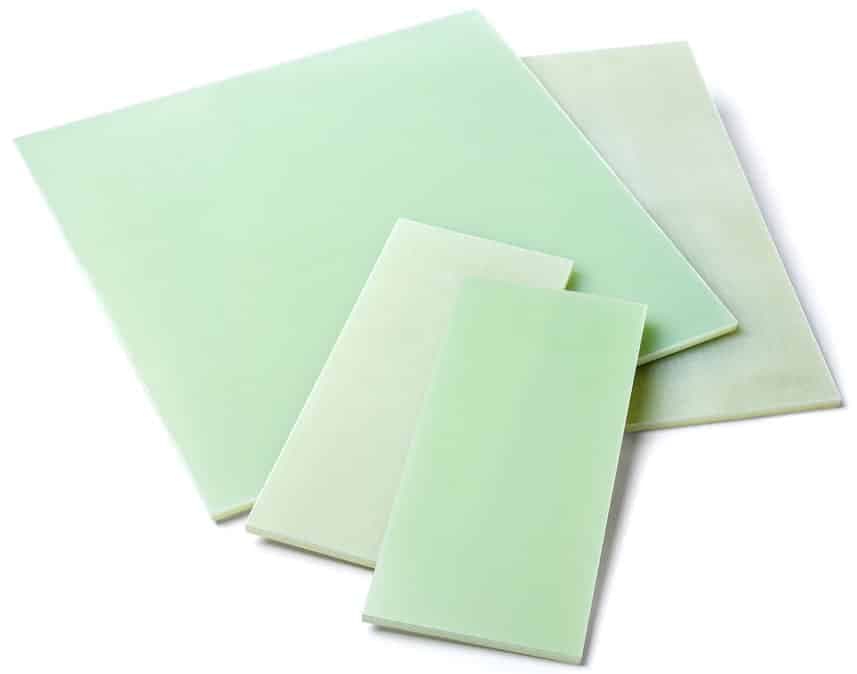
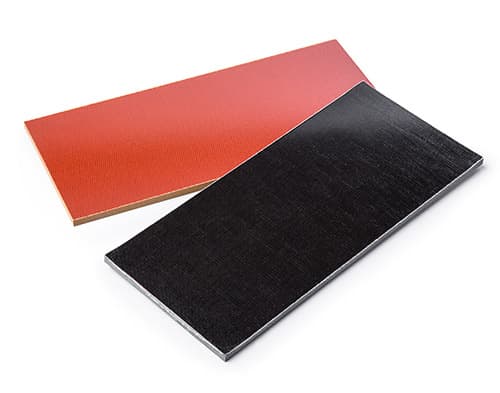
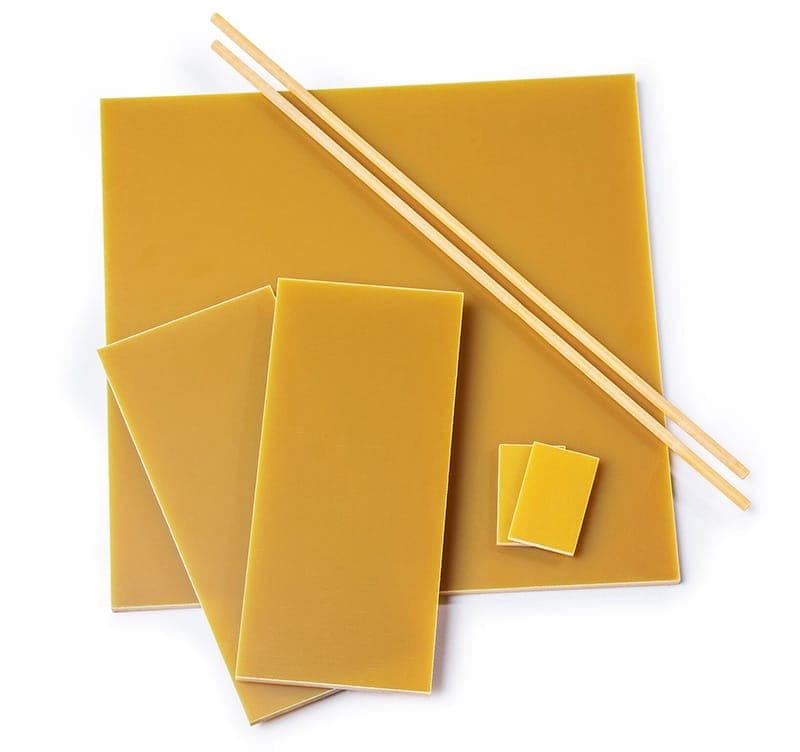
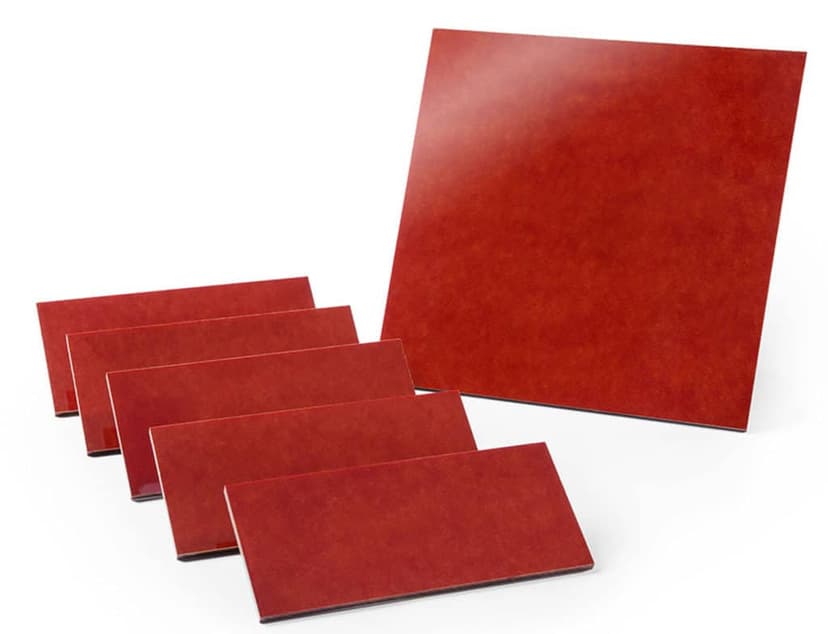
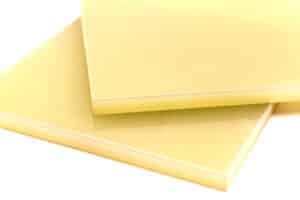
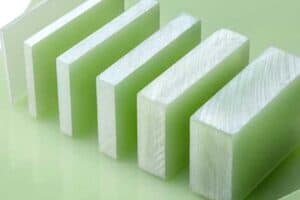
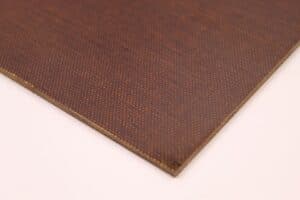
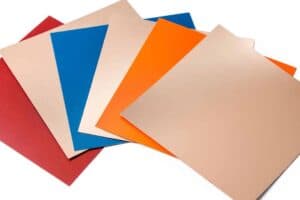
Current Composites has been manufacturing Laminated Sheets for decades. Our Laminated Sheets are made out of thermosetting resins including Phenolic, Melamine and Epoxy. The base materials we use to create our Laminated Sheets include: Fiberglass, Paper, Cotton as well Carbon Fiber. These various substrates are impregnated, “B Staged”, with our resins, and then pressed under heat and high pressure. This process produces a dense homogeneous material, that is easy to tap, saw, drill, and machine.
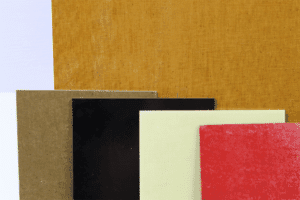
Current Composites manufactures their Laminated Sheets in assorted colors and sizes for the convenience of customers, and are equipped to make sheets up to 96″ long. Depending on the grade chosen, Laminated Sheets are anywhere from .005″ to 3.00″ thick. All tolerances meet NEMA standards, but clients are welcome to contact our sales office to get in-depth details on specific tolerances. For closer tolerances we can also offer surfacing sanding.
We can provide custom fabrication upon request, this includes a cut to size. Our quotes are free with no obligation to purchase. All we need is your blueprints and/or specs to provide an accurate quote. For further information or to obtain a quote, you can contact us through e-mail, by phone (203) 469-1337, or by Fax (203) 467-8435.
Key Properties:
- Superior heat resistance
- High impact and tensile strength
- High dimensional stability
- Excellent dielectric strength
- Good machinability
- Flame & Smoke test data
- Many other uses
Some uses:
Good wear resistance when in contact with steel or other plastics. Moderate heat resistance. Chemical resistance is good when exposed to organic solvents and oils. Gears, Bearings, Panels, Slot Wedges, Slide Panels, Pinions, Spacers, Cams, Pulleys
Good wear resistance when in contact with steel or other plastics. Moderate heat resistance. Chemical resistance is good when exposed to organic solvents and oils. Terminal Boards, Motor Bases, Gears, Insulators, Spacers, Bushings, Washers, Sheaves
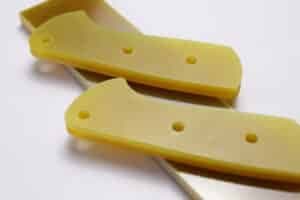
Head Board for Sails, Structural Components, Lightweight Tubing, Carburetor Intake Reeds, Knife Handle Scales
G-3
Use for thermal insulation and mechanical applications. Seals, Acid Resistant Gaskets, Oven Internals, Structural Applications (Aircraft)
Suitable for power equipment in marine applications. Circuit Breakers, Arc Barriers, Arc Shoots, Motor Wedges, Insulator Panel, Switch Board Parts
Electrical Equipment, Antenna Insulators, Antenna bases, Test Boards, End Plates, Terminal Boards, Circuit Board Holders, Underwater Conditions, Medical Diagnosis
Standoffs, Welding Parts, Molded Parts, Bushings
Fixture Plates, Jig Models, Switch Parts, Slider Stock, Ball Bearing Retainers, Wear Plates, Cams and Pushers, Mixing Blades
Panels, Electrical Parts, Terminal Strips, Mild Acid Applications
Low Voltage Insulating Washers, Bushings, Sleeves, Switch Bases, Panel Boards, Trust Washers, Backing Disks, Terminal Blocks
Switch Gear, Electrical Cabinetry, Tooling Stock, Transformer Spacers, Coil Forms. Power distribution and structural applications in electrical equipment such as oil filled transformers. Electronic applications include test panels for printed circuit boards
Available in NEMA grades:
Constructed from a cellulosic paper combined with a phenolic resin binder. Suitable for normal electrical applications. It is not recommended for punching. May be machined using normal machine tools.
Constructed from a cellulosic paper combined with a phenolic resin binder. Good electrical properties in high humidity. It has cold flow characteristics. Excellent machining characteristics.
Constructed from a woven cotton fabric with a phenolic resin binder. Intended for a wide variety of mechanical applications requiring high impact strength and resiliency.
Constructed from a woven cotton fabric with a phenolic resin binder. Ideal in electrical applications requiring good moisture resistance and good mechanical strength than materials with glass substrates. Possesses fairly good dialectric properties and medium dielectric loss.
Constructed from a woven fine cotton fabric with a phenolic resin binder. Recommended for machining and mechanical applications requiring a fine edge detail and appearance is requierd. It possesses a high density, good moisture resistance and mechanical strength.
Similar to L when electrical applications requiere good moisture and acid resistance, best for machined parts with smooth edges. Possesses fairly good dielectric properties and medium dielectric loss.
Made from a continuous filament woven glass fabric with a phenolic resin binder. Exhibits high flexural and impact strengths, and good electrical properties under low relative humidity conditions. Good dimensional stability.
Made from a continuous filament woven glass fabric with a melamine resin binder. The melamine resin system is flame and arc resistant. Meets UL 94. High mechanical strength (flexural, and impact) at room temperature in dry and wet conditions.
Constructed from a continuous filament woven glass fabric laminated with an epoxy resin binder, Offers high mechanical strength (flexural, impact and bonding) at room temperature. Good dielectric loss and electrical strength properties under both dry and humid conditions
Constructed from continuous woven glass fabric laminated with an epoxy resin binder. It has flame resistance of at least Class I in accordance with NEMA test method 7.11. The grade FR4 epoxy resin system is flame retardant and typically contains bromine.
Similar in composition and properties to Grade G-10/FR4 but more suitable for continuous use at higher temperature performance. G-11/FR5 holds at least 50% of its flexural strength at continuous elevated operating temperatures as high as 300°F
sheet sizes available:
- 36” x 48”
- 48” x 48”
- 48” x 72”
- 48” x 96”
- Special sizes available up to 102″ (Untrimmed)
FAQs
What are some common uses for Current’s laminated sheets?
Laminated sheets can be used for bushings, gears, bearings, pulleys, spacers, gaskets, wear blocks, terminal boards, slip rings, rotor vanes, insulators, thrust washers, arc chutes, coil forms, antenna bases. These products are NEMA grade quality and can be trimmed to any size.
Read More From Our Blog

A Guide to Laminated Tubing & How to Order USA Made
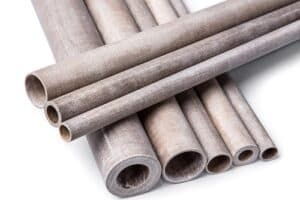
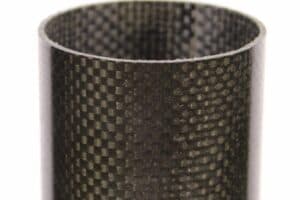
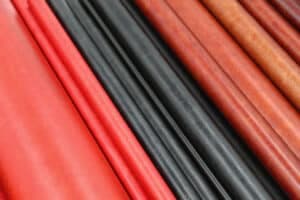
Laminated tubing is made from thermosetting resins (phenolic, epoxy or melamine) combined with base materials such as cellulose paper, woven cotton cloth or glass cloth.
more »
How Composites and Laminates are Used in the Knife & Weapon Industry
Knife and weapon handles have to be tough, stable, grippy and good-looking at the same time, and composite laminates do all four better than most natural materials.
more »
How Composites and Laminates are Used in the Marine Industry
Boats are hard on materials. Salt water corrodes metal, wood swells and rots, and everything on board takes vibration, UV and constant wetting.
more »